
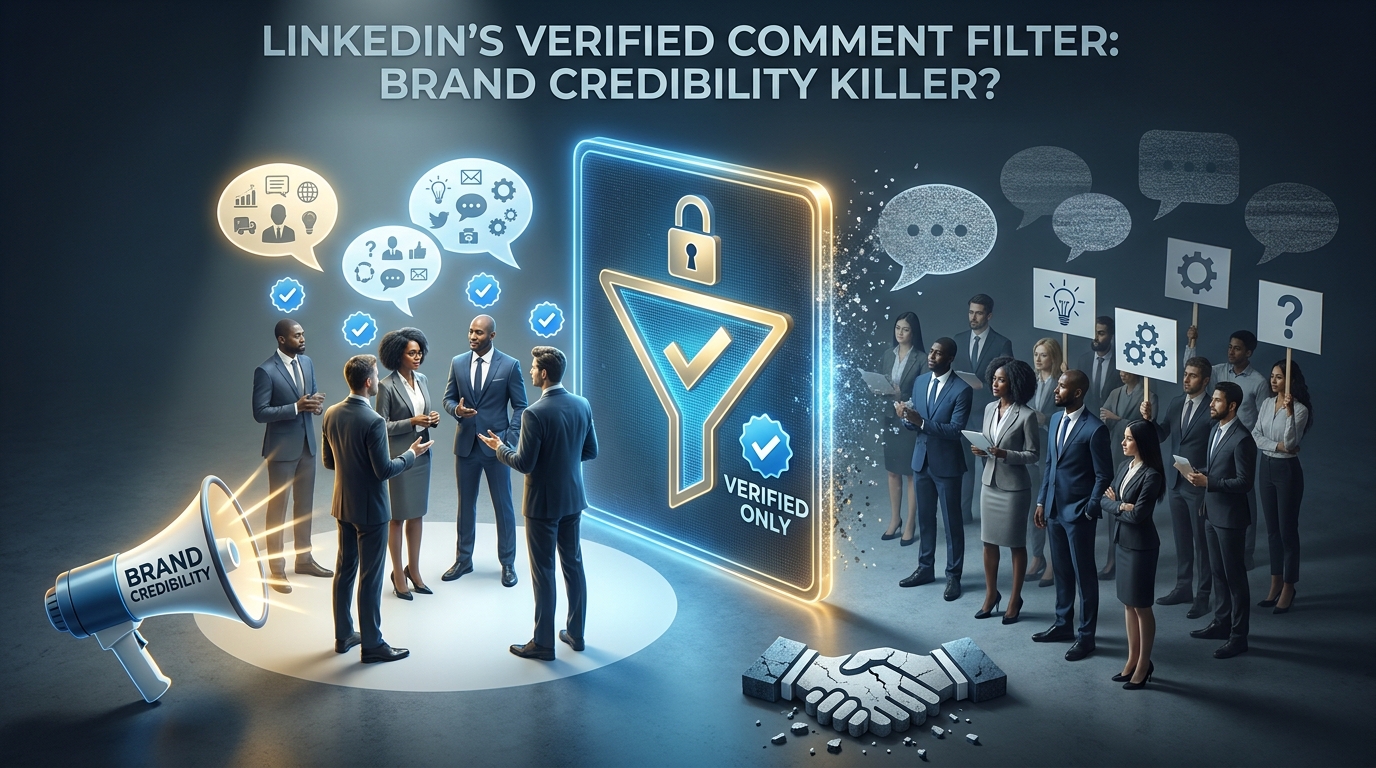
LinkedIn’s verified comment filter lets users hide comments from non-verified members, fundamentally changing how B2B professionals build credibility through public engagement. This post examines what the feature actually does, why it threatens personal brand momentum for LinkedIn personal branding strategies, and how B2B creators should adjust their LinkedIn comment quality approach without sacrificing authentic engagement.
What LinkedIn’s Verified Comment Filter Actually Does
The LinkedIn verified comment filter allows verified LinkedIn members to filter their post comments so only other verified accounts appear in their threads. Non-verified commenters still see their own contributions, but post authors and most readers won’t.
LinkedIn’s verification requires government ID submission and costs $29.99 monthly through LinkedIn Premium. The feature positions itself as spam reduction, but it fundamentally alters visibility dynamics for B2B LinkedIn strategy practitioners building authority through thoughtful engagement.
This isn’t just comment moderation. It’s credibility gatekeeping that tells marketing professionals their insights matter less if they haven’t paid for verification status.
Why This Changes Personal Brand Credibility Forever
Traditional LinkedIn personal branding depended on meritocratic visibility. Sharp comments on influential posts drove profile views, connection requests, and authority signals regardless of follower count or payment status.
That model breaks when high-reach creators activate the verified filter. Suddenly, your best insights vanish from the threads where decision-makers congregate. Your LinkedIn credibility features become invisible, no matter how valuable your contribution.
The Authority Acceleration Problem
Early-career marketers and independent consultants built followings by adding value in others’ comments before building their own audiences. That pathway now requires a $360 annual payment just for visibility access.
The filter creates a two-tier system: paid participants whose voices carry and unpaid contributors shouting into the void. For B2B creators without established platforms, this fundamentally undermines the visibility flywheel that made LinkedIn different from legacy media gatekeeping.
The Dark Side: Echo Chambers and Exclusion
When influential voices filter out non-verified commenters, they eliminate diverse perspectives that challenge assumptions. Marketing discourse suffers when only people who can afford verification shape conversations about LinkedIn comment quality standards.
This especially impacts international professionals, agency-side practitioners, and early-career voices who bring fresh thinking but lack corporate budgets for verification subscriptions. The result is homogenized threads dominated by established players talking to each other.
The Engagement Quality Paradox
Ironically, filtered comments often reduce actual engagement quality. When you exclude 80%+ of potential commenters, you lose the ground-level practitioners who spot implementation problems, share tactical workarounds, and ask clarifying questions that make content more useful.
The verified badge confirms identity, not expertise. Filtering for badges over substance optimizes for credentialing theater, not insight quality—exactly what B2B LinkedIn strategy should avoid.
How B2B Creators Should Respond to This Shift
Don’t activate the verified filter on your own content. The short-term spam reduction isn’t worth the long-term credibility cost of appearing exclusionary or afraid of open dialogue.
Focus engagement efforts on creators who keep comments open. You’ll reach more authentic audiences and avoid wasting insights where they’ll be filtered out. Check if influential accounts use the filter before investing time crafting thoughtful responses.
Alternative Credibility Signals
Build authority through consistent original posts rather than relying solely on comment visibility. Instagram’s recent algorithm shift prioritizing original photos and carousels over aggregated content signals a broader platform trend toward rewarding authentic creation over engagement gaming.
Document your expertise through case studies, frameworks, and position pieces that demonstrate competence independent of verification status. LinkedIn personal branding increasingly requires owned content that can’t be filtered away.
Engage meaningfully where you’re visible, but shift energy toward platforms and formats where your contributions reach intended audiences without payment barriers.
Authentic Engagement Still Wins (Even on LinkedIn)
Despite the verified filter’s existence, most LinkedIn users haven’t activated it. The majority of B2B decision-makers still see all comments, making genuine engagement valuable for LinkedIn credibility features.
The fundamental dynamics remain: insightful comments on relevant posts drive profile visits, and profile visits convert to opportunities when your positioning is clear. Payment gates change the math but don’t eliminate the model.
Focus on substance over visibility hacks. The filter’s existence proves LinkedIn struggles with engagement quality, but the solution is better contributions, not credentialing gatekeeping. Marketing teams building genuine expertise will outlast those optimizing for algorithm tricks or access games.
—
FAQ
Does LinkedIn verification improve my B2B marketing credibility?
Verification confirms identity but doesn’t signal expertise or authority. Most B2B buyers evaluate credibility through content quality, recommendations, and demonstrated results rather than badge status.
Should I pay for LinkedIn verification to avoid being filtered?
Only if the $360 annual cost fits your budget and you regularly engage in threads from verified creators who use the filter. Check whether your target audience actually activates filtering before investing.
How common is the verified comment filter among B2B influencers?
Adoption remains relatively low as of mid-2026, with most thought leaders keeping comments open. Activating the filter risks appearing exclusionary, which contradicts most personal branding strategies.
What’s the best alternative to comment-based LinkedIn growth?
Consistent original posts demonstrating clear expertise and perspective. Build authority through owned content rather than relying on visibility in others’ threads.
Will other platforms adopt similar verified filtering?
Likely, as platforms monetize access and combat spam. Focus on building audiences through email and owned channels that you control independent of platform policies.
—
Want to stay ahead of platform shifts that impact B2B strategy? Subscribe to Alington Media’s newsletter for practical breakdowns of marketing tool changes that actually matter.