
—
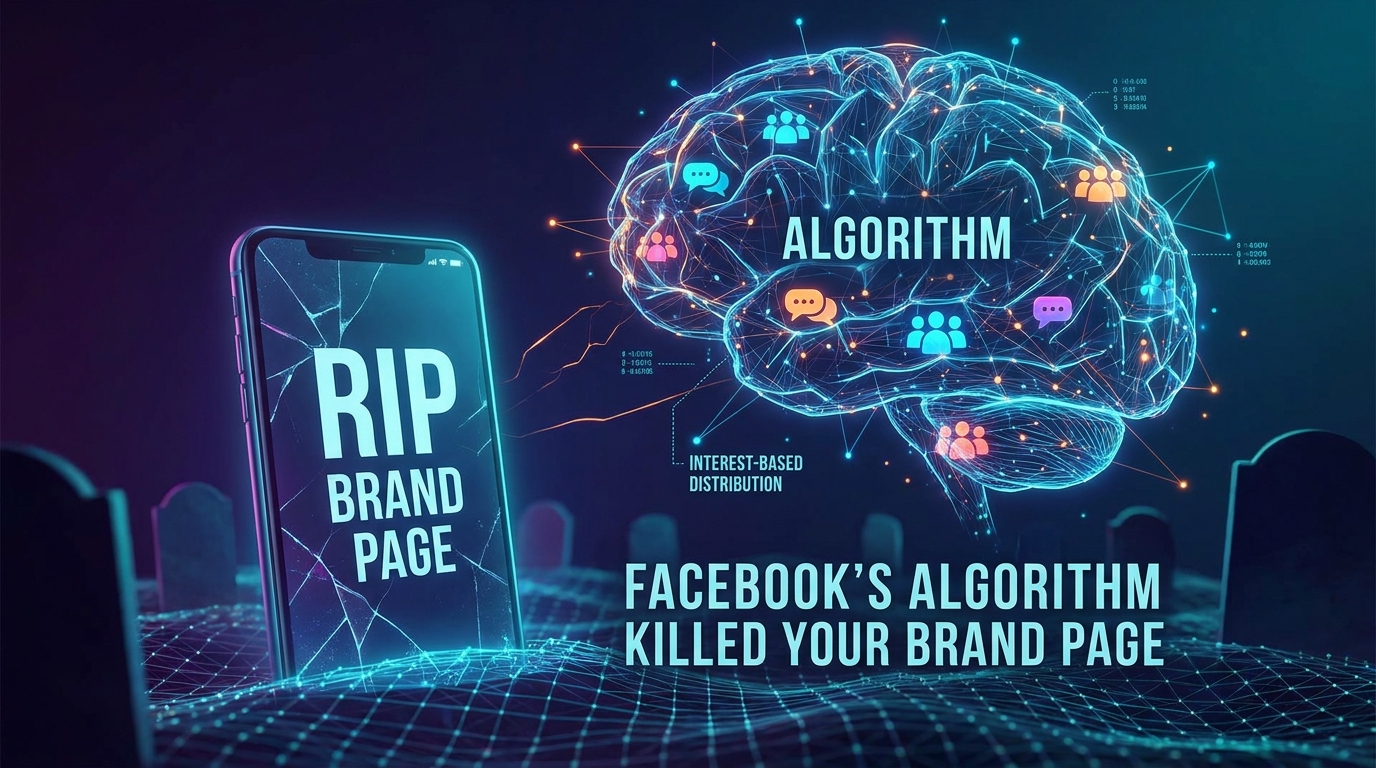
Facebook’s algorithm has fundamentally shifted from rewarding follower counts to prioritizing interest-based distribution and meaningful social interactions, making traditional B2B brand pages nearly obsolete for organic reach. The Facebook algorithm B2B marketers once optimized for—posting consistently to followers—no longer determines who sees your content; instead, dwell time, completion rates, and private sharing now dictate visibility. This post explains why Facebook groups outperform pages, how interest-based distribution reshapes social media reach in 2026, and what B2B marketing teams must do to adapt.
The Death of Follower-Based Reach on Facebook
Your 10,000 page followers don’t guarantee 10,000 impressions anymore. They don’t even guarantee 1,000.
Facebook’s News Feed algorithm deprioritizes content from brand pages in favor of posts from friends, family, and groups. [Meta’s 2018 announcement](https://about.fb.com/news/2018/01/news-feed-fyi-bringing-people-closer-together/) explicitly stated the platform would prioritize “meaningful social interactions” over passive content consumption. For B2B marketers, this meant the end of reliable organic reach through company pages.
The follower count that your marketing team spent years building now functions primarily as social proof, not distribution. When you publish a post, Facebook shows it to a small test audience—regardless of who follows you. If that sample engages through comments, shares, or sustained viewing, the algorithm expands reach. If not, the post dies.
This shift punishes brands that treat Facebook like a broadcast channel. The Facebook algorithm B2B teams face today rewards conversation, not announcements.
Why Meaningful Interactions Favor B2B Groups Over Brand Pages
Facebook’s definition of “meaningful social interactions” includes comments, replies, shares to private messages, and group discussions. Notice what’s missing: likes on brand posts.
Facebook groups generate these interactions naturally. Members ask questions, debate solutions, share experiences, and tag colleagues. Each action signals to the algorithm that the content creates value worth distributing further.
Brand pages, by contrast, struggle to spark genuine conversation. Even well-crafted posts typically generate passive consumption—scrolling past, maybe a like, rarely a substantive comment thread. The algorithm interprets this passivity as low value and restricts distribution accordingly.
The structural advantage of Facebook groups versus pages isn’t subtle. Groups create peer-to-peer exchanges. Pages create company-to-audience broadcasts. In 2026, the algorithm heavily favors the former.
B2B marketers who migrated community-building efforts to groups saw this shift coming. Those who doubled down on page follower growth are now wondering why posts reach 2% of their audience.
Interest-Based Distribution: The New Social Media Reality
Facebook no longer asks “who follows this page?” when deciding distribution. It asks “who might be interested in this content?”
Interest-based distribution means your post about marketing automation can reach someone who’s never heard of your company but recently engaged with similar content. Conversely, it means your followers won’t see your post if Facebook’s algorithm doesn’t match their recent behavior patterns.
This mirrors changes across every major platform. Instagram’s algorithm prioritizes Reels based on user interests, not follower graphs. LinkedIn surfaces content to members who engage with similar topics, regardless of connection status. TikTok’s For You page made interest-based distribution the default, forcing competitors to follow.
For B2B marketers, this shift changes content strategy fundamentally. Topic relevance and engagement quality now matter more than audience size. A tightly focused post that sparks conversation among 500 interested users outperforms a generic announcement shown to 5,000 disengaged followers.
Social media reach in 2026 isn’t about building audiences—it’s about creating content that algorithms identify as valuable to specific interest clusters.
Dwell Time and Completion Rates Trump Subscriber Counts
Facebook’s algorithm measures how long users spend with your content and whether they consume it completely. These metrics—dwell time and completion rate—directly influence distribution.
A video that keeps viewers watching for 45 seconds signals quality. A carousel post that users swipe through entirely demonstrates value. A text post that prompts users to tap “see more” and read the full caption indicates relevance.
These behavioral signals replace vanity metrics. Your page might have 50,000 followers, but if users scroll past your posts within one second, the algorithm learns your content doesn’t merit distribution. A competitor with 5,000 followers whose posts generate 30-second dwell times will reach more people.
This rewards depth over breadth. Long-form content that holds attention, educational posts that require focus, and controversial takes that spark prolonged discussion all benefit from this algorithmic preference.
B2B marketers optimizing for the Facebook algorithm must now think like content creators, not brand managers. The question isn’t “will our followers see this?” but “will this make people stop scrolling?”
What B2B Marketers Must Do Now to Adapt
First, shift community investment from pages to groups. Launch a Facebook group focused on your industry, not your product. Facilitate peer discussions, share third-party resources, and position your brand as the host rather than the broadcaster.
Second, create content optimized for interest signals rather than follower loyalty. Write posts addressing specific problems your target audience actively researches. Use language and frameworks that match how prospects discuss these topics, making your content algorithmically discoverable to interested non-followers.
Third, measure engagement depth, not reach breadth. Track comment threads, share-to-message ratios, and average watch time. These predict algorithmic distribution better than impressions or follower growth.
Fourth, accept that organic Facebook reach for brand pages will continue declining. Reallocate budget from community management to paid advertising or owned channels. Use Facebook pages for retargeting audiences and customer service, not lead generation.
Fifth, diversify platform dependency. The Facebook algorithm changes that killed page reach foreshadow similar shifts across all platforms. Build owned channels—email lists, communities, content hubs—that don’t rely on algorithmic permission to reach your audience.
The brands succeeding on Facebook in 2026 stopped treating it like 2016. They adapted to interest-based distribution, prioritized meaningful interactions through groups, and optimized for the behavioral signals that algorithms reward.
FAQ
Does the Facebook algorithm still show my page posts to my followers?
Yes, but to a small fraction. Facebook shows your posts to a sample of followers and interested non-followers, then expands distribution based on engagement. Most pages reach 2-5% of followers organically without paid promotion.
Are Facebook groups better than pages for B2B marketing in 2026?
For organic reach and community building, yes. Groups generate the meaningful social interactions Facebook’s algorithm prioritizes. However, pages remain valuable for paid advertising, customer service, and establishing brand presence.
What are meaningful social interactions on Facebook?
Facebook defines these as comments, replies, shares (especially to private messages), and active group participation. Passive actions like post likes or video views carry less weight in algorithmic distribution decisions.
How does interest-based distribution affect B2B content strategy?
It means creating content around topics your audience cares about, not just your products. Focus on educational value, industry insights, and discussion-worthy perspectives that signal relevance to both followers and interested non-followers.
Can I still use Facebook for B2B lead generation?
Yes, through paid advertising and strategically run groups. Organic page reach for lead generation has become unreliable. Most successful B2B strategies now combine paid Facebook ads with owned community channels and content marketing.
—
Want help navigating algorithmic changes across paid and organic channels? [Subscribe to Alington Media’s newsletter](https://alington.media) for biweekly insights on AI marketing, social platforms, and paid advertising strategy.