
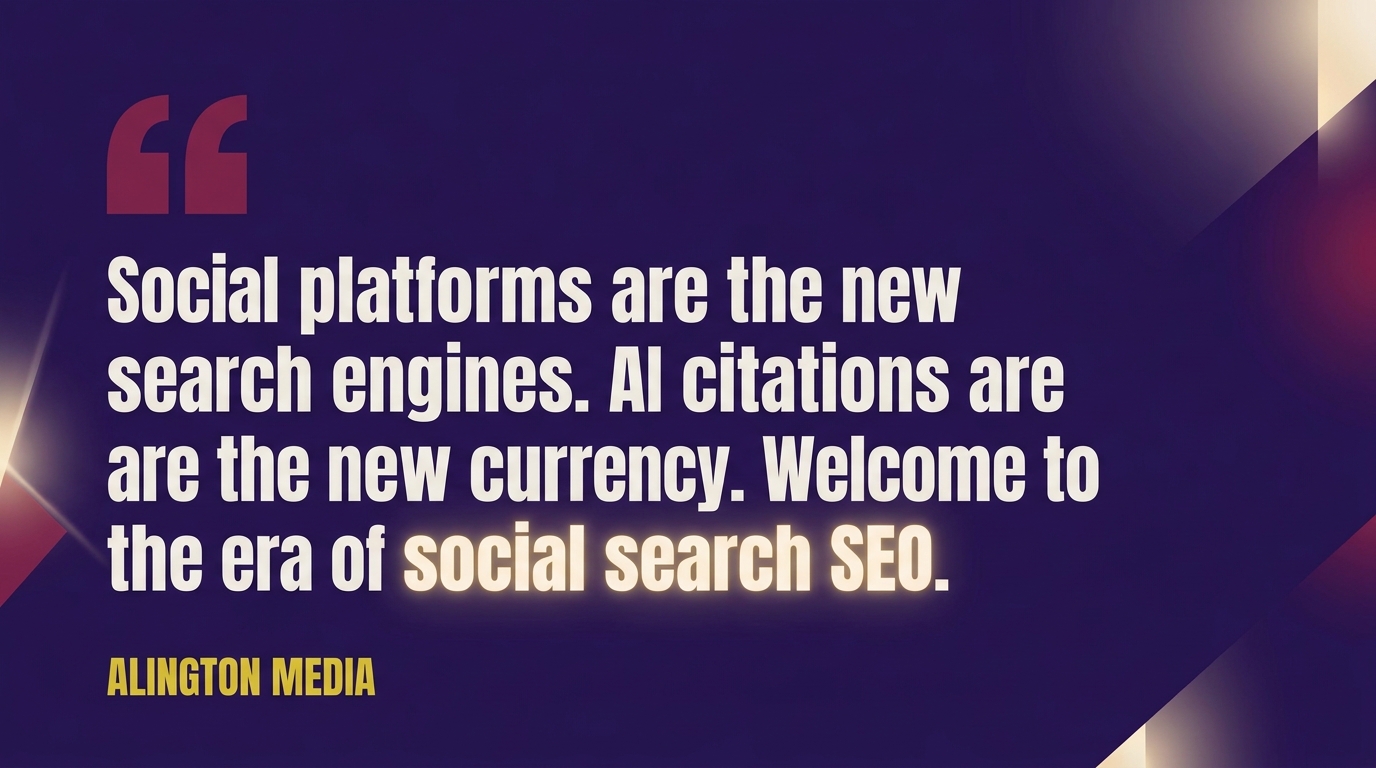
Social platforms now function as primary search engines for discovery, while AI systems cite content based on structure and authority signals rather than traditional backlinks. This post examines how social search SEO, AI citations, and founder-led content are reshaping B2B content discoverability—and what marketing teams need to change in 2026 to maintain visibility and generate leads.
The Social Search Revolution: Platform Data & Usage Trends
TikTok and Instagram aren’t just content feeds anymore. They’re replacing Google for millions of users making purchase decisions. According to [Google’s own internal data shared in 2022](https://techcrunch.com/2022/07/12/google-exec-suggests-instagram-and-tiktok-are-eating-into-googles-core-products-search-and-maps/), nearly 40% of young adults prefer Instagram and TikTok for search over Google Maps or Search.
That trend has accelerated. LinkedIn reports that video content now generates 5x more engagement than static posts, and the platform’s algorithm increasingly surfaces content based on search intent signals, not just network connections. X (formerly Twitter) rebuilt its search infrastructure in 2024 specifically to compete as a real-time information engine.
For B2B marketers, this means content strategy can no longer assume Google is the default discovery layer. Social platforms are where prospects first encounter your brand, evaluate credibility, and decide whether to engage. Your content must be optimized for social search SEO—not as an afterthought, but as a primary distribution channel.
Platform-Specific Search Behavior Patterns
Each platform handles search differently. LinkedIn prioritizes recency and engagement velocity for searched terms. TikTok’s algorithm weighs watch-through rate and shares. Instagram surfaces Reels based on topic hashtags and audio trends.
YouTube remains the second-largest search engine globally, but its recommendation engine now favors viewer satisfaction metrics over pure watch time. That shifts content strategy toward depth and value delivery rather than clickbait hooks.
Marketing teams need platform-specific optimization tactics. That means understanding how each algorithm interprets search intent, which metadata fields drive discoverability, and how to structure content for both human readers and machine parsing.
How AI Citations Are Changing Content Attribution
ChatGPT, Perplexity, Google’s AI Overviews, and similar tools now cite sources when answering queries. But they don’t cite based on traditional SEO signals alone. AI citations prioritize content structure, clarity, recency, and topical authority.
Content formatted as clear answers—with questions as headings, concise explanations, and structured data—gets cited more frequently. AI models prefer content that demonstrates expertise through specificity and that breaks complex topics into scannable components.
This creates new incentive structures for content teams. The goal isn’t just ranking on page one anymore. It’s being cited as the authoritative source when AI answers questions in your domain.
Optimizing Content for AI Citation
Use question-based H2 and H3 headings that match natural language queries. AI models scan heading structures to identify relevant passages. Clear, direct answers immediately following question headings increase citation probability.
Include structured data markup where relevant—FAQ schema, article schema, and organization schema help AI systems understand content context. These aren’t just technical implementations; they’re semantic signals that improve content discoverability across AI platforms.
Publish updated content regularly. AI models weight recency heavily when determining which sources to cite. A 2024 article on a stable topic may get passed over for a 2026 refresh, even if the core information hasn’t changed.
Why Human-Led Content Wins in the AI Era
AI can generate content at scale, but it struggles to produce genuinely novel insights, personal experience, or trust signals. That makes founder-led content and human expertise more valuable, not less.
LinkedIn’s algorithm explicitly rewards “People Also Know For” signals—the platform’s version of topical authority. Accounts that consistently post original insights in a specific domain get amplified to broader audiences searching those topics. B2B buyers increasingly filter content by author credibility before engaging.
Founder visibility has become a competitive moat. When prospects search for solutions, they look for evidence that real humans with domain expertise stand behind the product. Anonymous corporate content gets ignored. Authentic founder voices build trust that AI-generated alternatives can’t replicate.
Implementing Founder-Led Content Programs
The most effective B2B content programs in 2026 treat founders and subject matter experts as creators, not just spokespeople. That means investing in content infrastructure—recording setups, editing support, distribution systems—to make consistent publishing sustainable.
Short-form video performs especially well for founder-led content. Three-minute LinkedIn videos explaining strategic decisions, industry shifts, or product philosophy generate both immediate engagement and long-term search discoverability. These videos surface in platform search results months after publication.
Written founder commentary still matters, particularly for AI citations. Detailed post-mortems, tactical breakdowns, and contrarian takes formatted as blog posts or LinkedIn articles get cited by AI systems answering industry-specific queries.
Adapting SEO Strategy: Content Structure for Social Discovery
Traditional SEO focused on keyword density, backlinks, and domain authority. Social search SEO requires different optimization priorities: engagement signals, creator authority, platform-specific metadata, and content formatting for both human and AI consumption.
Titles and opening lines must work as standalone snippets. Social platforms surface content in search results with minimal context. If your first sentence doesn’t clearly communicate value, the content gets skipped regardless of quality deeper in the piece.
Hashtags function as keyword tags on visual platforms. LinkedIn limits effective hashtag use to 3-5 relevant terms. Instagram and TikTok can support more, but only if they genuinely match user search behavior. Research platform autocomplete suggestions to identify which hashtags have active search volume.
Metadata Optimization for Social Platforms
LinkedIn article features, YouTube descriptions, TikTok captions, and Instagram alt text all function as metadata that platform search algorithms parse. Treat these fields as seriously as you would meta descriptions for traditional SEO.
Include your primary keyword and LSI keywords naturally within the first 100 characters of captions and descriptions. Social algorithms weight opening text more heavily when matching content to search queries.
Tag relevant accounts and locations when appropriate. These function as structured data signals that help platforms categorize content and surface it to users searching related topics or exploring tagged entities.
Implementing a Search-Aware Social Strategy for B2B
B2B content discoverability now requires integrated execution across social platforms, not siloed campaigns. Marketing teams need workflows that create search-optimized content efficiently and distribute it across multiple platforms with platform-specific formatting.
Start with pillar content designed for AI citations—comprehensive guides, frameworks, and methodologies formatted with clear question-based headings. Publish these as blog posts with full schema markup, then atomize them into social content.
Each section of a pillar post becomes a LinkedIn post, a short video script, or a carousel. This approach maintains topical consistency across platforms while optimizing each asset for its native search environment.
Measurement Frameworks for Social Search Performance
Track search-driven metrics, not just engagement vanity metrics. Monitor how much traffic comes from platform search versus feed distribution. LinkedIn analytics shows this breakdown. YouTube Studio provides search versus suggested view sources.
For AI citations, set up Google Alerts and use tools like Perplexity’s cited sources feature to track when your content gets referenced. Manual monitoring works for now—proper attribution tracking tools will mature throughout 2026.
Measure founder visibility separately from brand metrics. Track follower growth, engagement rate, and search appearance for founder accounts. These metrics predict future brand discoverability as AI systems increasingly weight human credibility signals.
FAQ
What is social search SEO?
Social search SEO is the practice of optimizing content for discoverability within social platform search functions rather than traditional search engines. It requires platform-specific strategies for metadata, content formatting, and engagement signals that drive algorithmic visibility.
How do AI citations differ from traditional backlinks?
AI citations reference your content when answering user queries, making it visible even if users never click through to your site. Unlike backlinks that pass domain authority, AI citations demonstrate topical authority and increase brand credibility when AI tools position you as a trusted source.
Why does founder-led content perform better than corporate content?
Both AI systems and human audiences weight credibility signals heavily when evaluating content. Founder-led content carries implicit expertise and authenticity that anonymous corporate publishing lacks, making it more likely to be cited by AI and trusted by prospects.
Which social platforms matter most for B2B search discoverability?
LinkedIn dominates for B2B professional search, but YouTube provides long-term evergreen discoverability. X offers real-time industry conversation search, while TikTok increasingly captures younger B2B buyers researching solutions. Most effective strategies maintain presence across multiple platforms.
How should B2B marketing teams structure content for AI citation?
Use question-based headings that match natural language queries, provide direct answers in opening sentences, implement structured data markup, and publish updates regularly. Content should be scannable by both humans and AI systems parsing for authoritative sources.
—
Ready to build a search-aware social strategy? [Subscribe to Alington Media’s newsletter](https://alingtonmedia.com) for tactical breakdowns on AI-era marketing execution.