
—
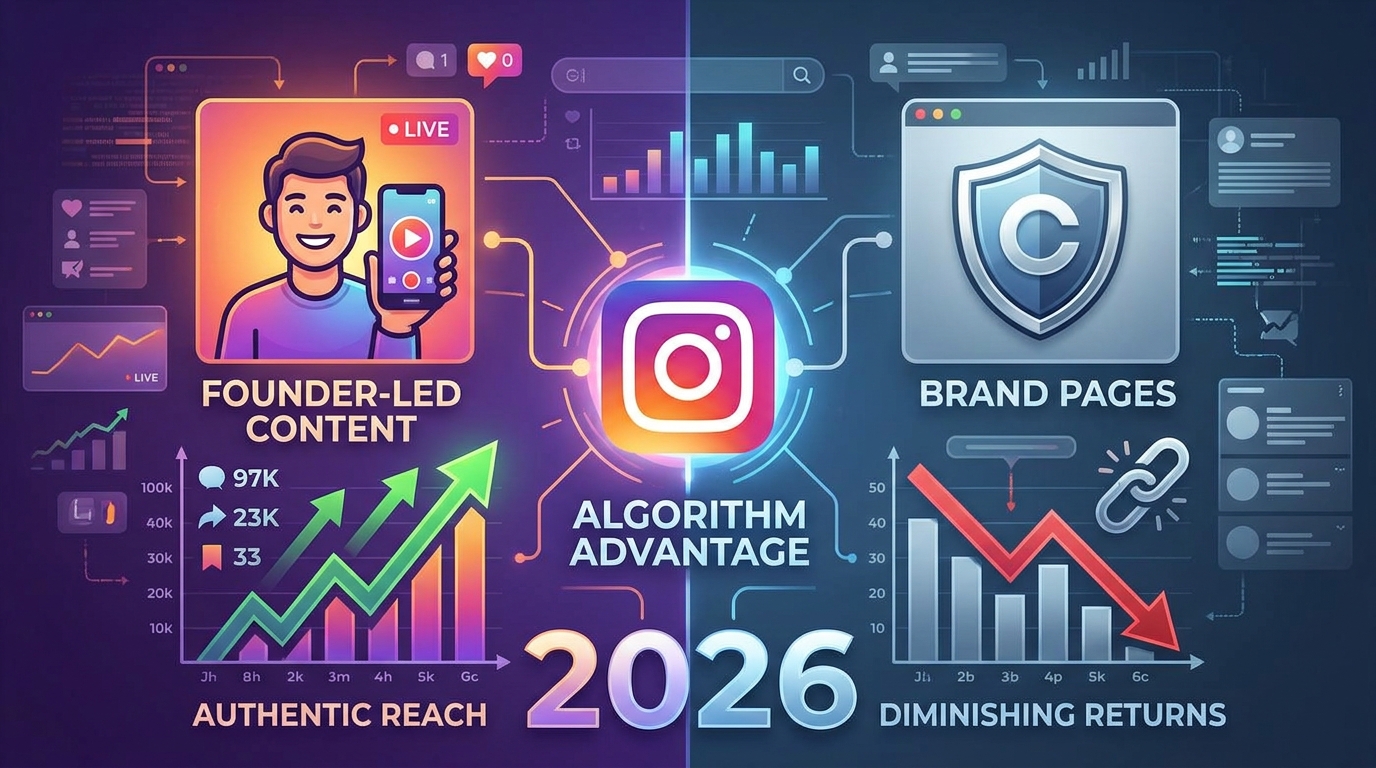
Instagram’s 2026 algorithm change prioritizes individual creator accounts and founder-led content over traditional brand pages, reshaping how B2B companies approach Instagram reach in 2026. This shift rewards expert content strategy built around recognizable people, not polished corporate feeds. If your B2B Instagram marketing still centers on the brand account alone, you’re already behind.
Why Instagram’s 2026 Reset Matters for B2B
Meta rolled out the latest Instagram algorithm update in Q1 2026, explicitly favoring personal accounts with high engagement velocity and topic authority. The platform now treats brand accounts as secondary distribution channels unless they demonstrate consistent human interaction patterns.
For B2B marketers, this isn’t just a consumer trend spilling over. LinkedIn already proved that executive voices outperform company pages by wide margins. Instagram is catching up, and the implications are immediate: your founder’s face needs to be your content strategy, not an occasional guest appearance.
The algorithm now weights three signals heavily: creator authenticity markers, video-first formatting, and search intent alignment. Brand accounts that don’t adapt will see organic reach continue its decline while founder-led content gets algorithmic lift.
Founder-Led Content Gets the Algorithm Advantage
Instagram’s 2026 reach model rewards individual profiles because they generate higher-quality engagement signals. Comments, saves, and shares from personal accounts carry more weight than likes on a brand post. The platform wants conversations, not broadcast channels.
Founder-led content naturally delivers this. When a CEO shares a strategic insight or a product lead walks through a feature decision, audiences respond differently than when the same content comes from a faceless brand handle. The Instagram 2026 algorithm change recognizes this behavioral difference and amplifies it.
This aligns with broader social media algorithm updates across platforms. TikTok, YouTube, and LinkedIn all moved toward elevating individual creators over institutional accounts between 2023 and 2025. Instagram is standardizing what’s already working elsewhere.
The Technical Shift Behind the Change
Instagram’s recommendation engine now indexes profile metadata differently. Personal accounts with consistent topic focus—especially those using keyword-rich bios and posting schedules—get classified as expert sources. Brand accounts without a named human attached get categorized as commercial entities with lower organic distribution caps.
The platform also expanded its search functionality throughout 2025, making Instagram more discovery-driven than feed-driven. Founder profiles optimized for search queries (“AI automation for B2B,” “demand gen strategy”) surface in results where brand pages don’t.
Brand Accounts Are Losing Organic Reach
Generic brand content is being algorithmically suppressed. Posts that look like ads—even if they’re organic—get less reach. Content that lacks a clear human perspective gets buried. The brand account model that worked in 2020 delivers diminishing returns in 2026.
This doesn’t mean brand accounts are obsolete. They’re still necessary for customer service, product updates, and paid advertising anchor points. But organic reach from brand pages is no longer a viable growth channel for most B2B companies.
The strategic miss here is that most B2B companies still allocate content resources to the brand account first, then treat founder content as bonus activity. The Instagram 2026 algorithm change inverts that priority.
What This Means for Your Content Strategy
Your B2B Instagram marketing needs restructuring around individuals, not institutions. Identify which founders, executives, or subject matter experts have the authority and willingness to show up consistently. Build content systems around them.
This isn’t about making everyone an influencer. It’s about recognizing that expert content strategy now requires named experts. Your Head of Product should be the face of product content. Your founder should own strategic vision posts. Your customer success lead should share client outcomes.
Each person becomes a content hub for their domain. The brand account becomes a republishing vehicle and a navigation point, not the primary content engine.
Video-First Is Non-Negotiable
The Instagram 2026 algorithm change heavily favors Reels and video content over static posts. If your founder-led content strategy is still built around carousels and single images, you’re fighting the platform’s core recommendation logic.
Short-form video doesn’t require production budgets. It requires consistency and a willingness to speak directly to camera. B2B audiences are more forgiving of rough production quality than most marketers assume, especially when the content delivers genuine insight.
How to Adapt: Practical Steps for 2026
Start by auditing your current content distribution. What percentage comes from personal accounts versus the brand account? For most B2B companies, it’s heavily skewed toward the brand.
Build founder profiles as content channels. Optimize bios for search keywords. Post 3-5 times per week minimum. Use video formats predominantly. Engage directly in comments to signal authentic interaction to the algorithm.
Repurpose long-form content into founder-voiced short clips. If you publish a blog post, the founder should record a 60-second take on the key insight. If you ship a feature, the PM should explain why it matters on video.
Coordinate cross-posting strategically. Let the founder’s account debut content, then reshare from the brand account 24-48 hours later. This leverages the algorithmic advantage of personal profiles while maintaining brand presence.
Invest in creator-style production for executives. This means teleprompter apps, simple ring lights, and editing tools that make consistent video output feasible without a production team on every shoot.
—
FAQ
What is the Instagram 2026 algorithm change?
Instagram now prioritizes personal creator accounts over brand pages in organic reach distribution. The algorithm favors profiles with human interaction patterns, video content, and topic authority signals. Brand accounts see reduced organic reach unless tied to named individuals.
Why does founder-led content perform better on Instagram now?
Personal accounts generate higher engagement quality, which the algorithm rewards. Comments and shares on founder content carry more weight than likes on brand posts. Instagram’s system classifies expert individuals differently than commercial entities, giving them better distribution.
Should B2B brands stop using their Instagram brand accounts?
No, but brand accounts should shift from primary content hubs to supporting channels. Use them for customer service, product announcements, and as paid advertising anchors. Prioritize founder and expert accounts for organic content growth instead.
How many times should founders post on Instagram in 2026?
Aim for 3-5 posts per week minimum to maintain algorithmic favor. Consistency matters more than volume. Video-first formats—especially Reels under 90 seconds—should comprise at least 70% of content to align with platform priorities.
Does this Instagram algorithm change affect B2B companies differently?
Yes, because B2B buying decisions involve trust and expertise signals more than consumer purchases. Founder-led content directly addresses these factors in ways brand accounts cannot. B2B Instagram marketing now requires named experts, not anonymous corporate voices.
—
Want actionable takes on where social algorithms and AI marketing are actually heading? [Subscribe to Alington Media’s newsletter](#) for the signals that matter to B2B marketing teams.